
Evacuation from Malaya February 1942

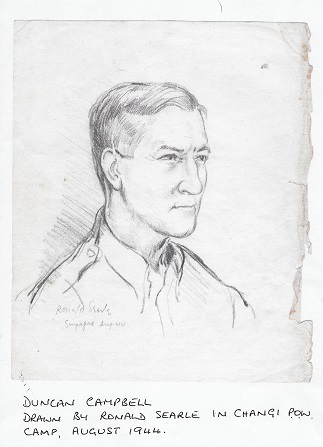 I was born in Penang, Malaya, My father was a Rubber Planter and my mother a Doctor. The Rubber Plantation was in Kedah in the north, near the border with Thailand.
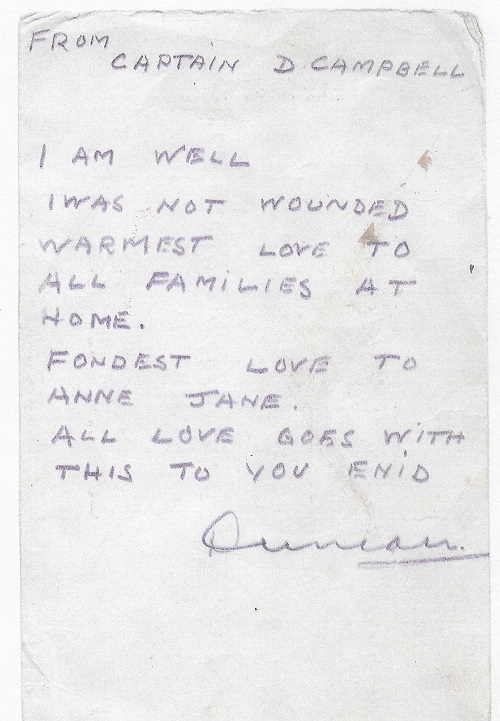
When war broke out, my father, Duncan Campbell, joined the Kedah Volunteer Force, along with other planters and civil servants. I am not sure of the exact dates but we, my mother, sister and I managed to get to Singapore and onto a ship carrying evacuees just before the fall of Singapore. My father was eventually captured by the Japanese who by this time had invaded the Malaya peninsular. He was interned in Changi POW Camp.
As far as I know we started off near Melbourne where my mother managed to get a job as the school doctor for Melbourne Girls’ School which had been evacuated to the hills in case the Japanese offensive reached Australia. I was only three and my sister eighteen months at the time so I don’t have sound memories of our time there.
 Eventually, we were able to join friends of my parents in Geelong where we attended the kindergarten of Geelong Grammar School. We used to collect the bread from a horse and cart at the bottom of the road, I remember being sent to pick up the still warm loaf, the end of which was stuck with holes where we had dug out the dough with our fingers! My mother made delicious apricot and almond jam from the trees in the garden.
In February 1945 the U boat activity was slowing down in the Atlantic and it was considered safe for us to return to the UK. We left Sydney Harbour in The Dominion Monarch, a cruise ship which had been requisitioned for war work and was then a troop ship. The ship took us to Wellington NZ where we picked up more families and then sailed through The Panama Canal to New York. My memory of Panama was of my mother trying to buy bananas for my sister and me from a man on the shore but he wouldn’t oblige.
We spent a few days in New York because we had time to go to a huge, or so it seemed, shop where my mother bought us each a doll which closed its eyes and cried, a great treat, which I still have.
Then we joined a convoy going across the Atlantic. Fortunately, we arrived safely in Liverpool on 19 April 1945.
The conditions on board must have been very cramped, my sister and I shared a bunk in the same cabin as my mother and another family. We had lessons on board; because I was just five and tall I remember being put in a class of seven year olds and being very upset when I knew I had spelt my name on a sheet of paper incorrectly but couldn’t figure out the right way! I was placed in the correct age group afterwards. We had lifeboat drill on what seemed to be enormous decks with two huge funnels. I remember barbed wire rolled up all the gang ways to the upper decks. I gather that ship is the one depicted towering above the rooftops in the introduction to Call The Midwife!
Later my mother said how exhausted ever one looked when we arrived in the UK. it was shortly before peace was declared in Europe
My father was repatriated in early 1946, I still remember his arrival at a house we rented at the time in Lauder Road, Edinburgh.
Anne Shaw
September 2018
———
Anne Shaw – Remembers her father in law and his brothers
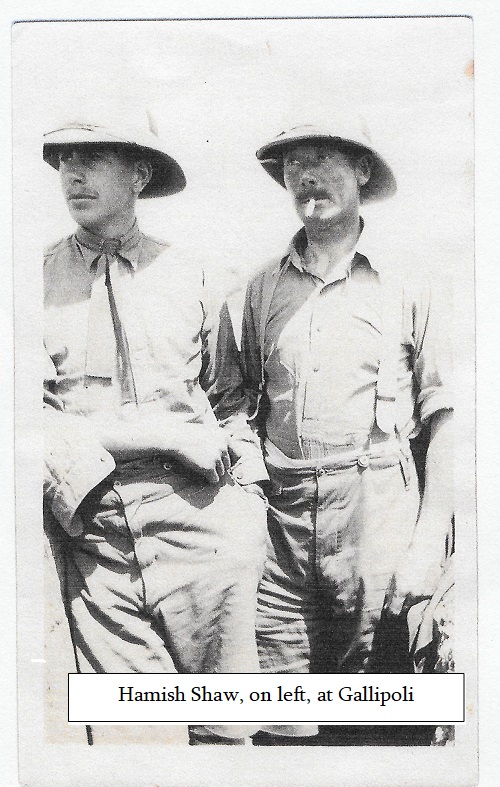 My Father in Law James Norrie Shaw, known as Hamish, was a pupil at the Edinburgh Academy and went directly from the Cadet Contingent through Officer Training Course to be commissioned into The Royal Scots. He was commissioned as a Second Lieutenant in November 1914 at the age of seventeen.
It seems he was sent on the second line of the battalion as he was not present in the Gretna Crash on 22nd May 1925. He went overseas on 15th November 1915 and may have been one of the last batch of reinforcements to the Battalion in the Gallipoli Campaign.
He was promoted Captain in 1917 and became the battalion Adjutant in 1918. He served at Gallipoli 1915-16 and in Egypt in 1916 to 18 and then France 1918 to 1919.
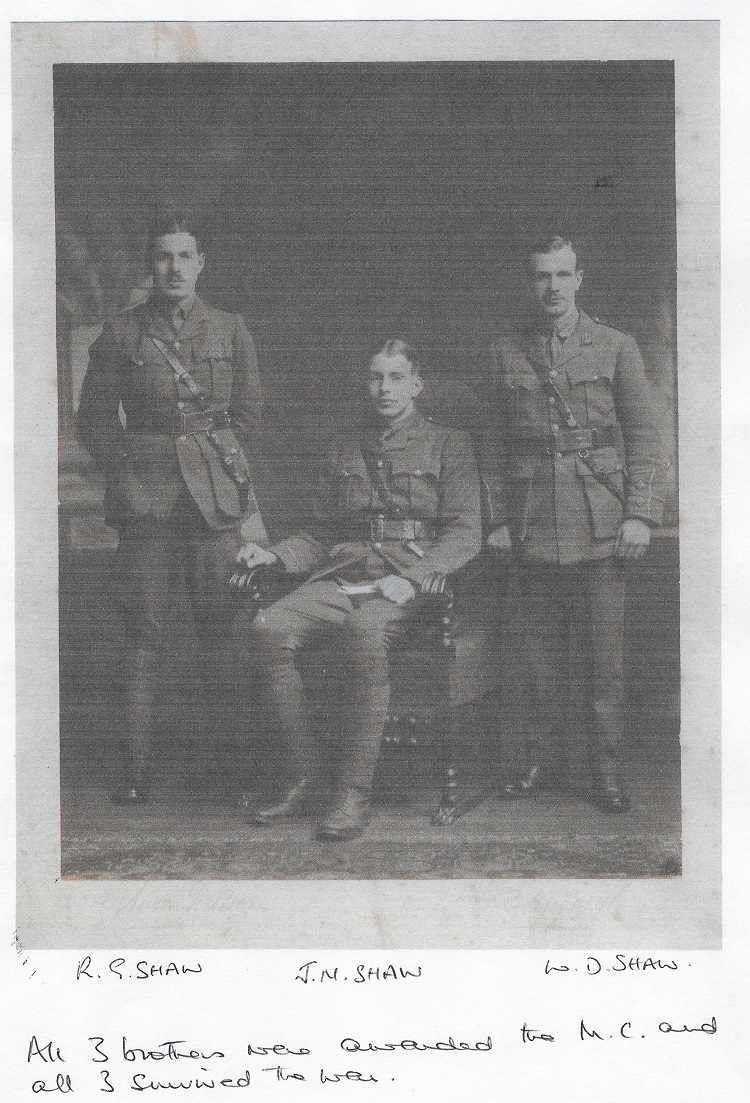
He was awarded the Military Cross in 1919 and was Mentioned in Despatches in 1919. He survived the war and played rugby for Scotland against Wales and Ireland in 1921, later becoming President of the SRU. He holds the GS and Victory Medals for the first world war.
Dr Robert Glen $haw, MC, was the oldest of three brothers of whom Hamish was the youngest. As a doctor, soon after graduating he joined the Royal Army Medical Corps. At the outbreak of war he was on sick leave, and for this reason he was kept in Ireland till June l915 when he was sent to Gallipoli. There he was attacked by the prevalent trouble, dysentery. On recovering he was attached to the Salonilka force, went with his division to Serbia, and remained with it after the retreat until he was appointed Deputy Assistant Director of Medical Services. For his work in Serbia he was awarded the Military Cross. In a letter to his old school he said that Serbia was
 “not exactly a health resort. The French, with characteristic common sense, recognize this and never keep troops there longer than eighteen months, and then only allow them to return after a year in France. A temperature of 106 degrees in the shade and the embarrassing attentions of the ever-present mosquito make one long at times for a change, even though it were to the western front with all its hardships. Personally, I have been very fortunate having had only three or four attacks of malaria. Some can count their attacks by the score.”
William Shaw was pupil in Stewart’s College from 1897 to 1907 and for two years was a member of the 1st XV being ‘one of the best forwards in a fine pack. Of powerful physique, his height made him particularly useful at a line-out.’ ‘Having had experience in the Edinburgh University OTC he obtained a. commission in the Highland Light Infantry and was promoted Captain in February 1915, and Major a year later. He was twice wounded, at Loos in September 1915, and on the Somme in October 1916, after which latter engagement the Military Cross was awarded him.’
October 2018